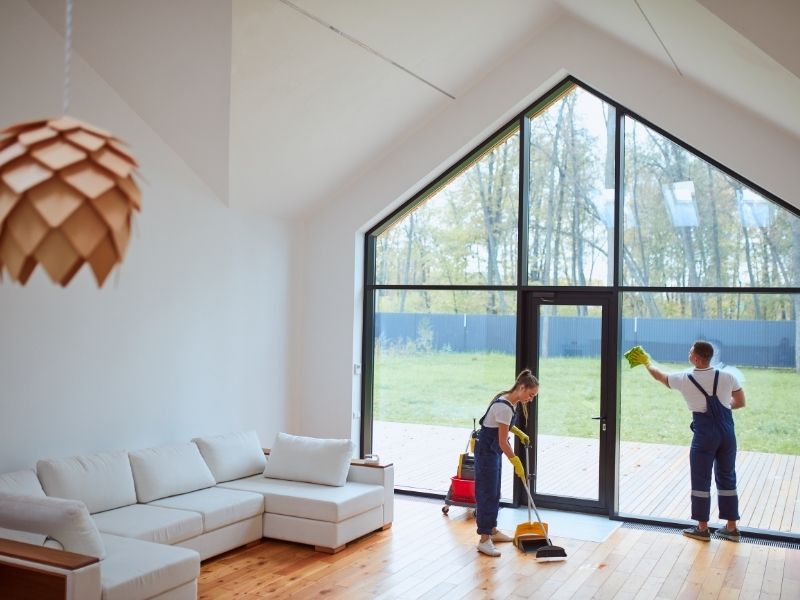
The price to get an Airbnb ready between guests in the UK typically sits between £50 and £120 per changeover, but this shifts based on size, whether linen washing is included, and where you are. For a 2-bedroom place, plan on £45 to £55 for the clean itself, or £85 to £90 when you add linen care. Bigger places and those in city centres can go past £150 per session. We'll show you exactly what drives these numbers and what you should budget for in different situations.
When people check out of their rental home, what follows is far more involved than a standard house tidy. The cleaning fee on an Airbnb typically represents a percentage between 15% and 25% of the total booking value for short stays of two to three nights, making it one of the biggest hidden fees for those who book.
We work to a checklist of 50+ individual tasks per changeover, far more detailed than a regular domestic session. This covers everything from washing all linens and towels to tidying inside cupboards, checking for damage, restocking amenities like toilet paper and shampoo, and making sure floors are spotless.
The work is time-sensitive. On average, a full changeover takes between 2.5 and 5 hours, depending on how big the place is, how much linen there is, and what condition it was left in. Same-day turnarounds can push fees up by 10% to 25%, because of tighter timing, more staff needed, and a higher chance of delays.

Our standard service handles all the core tasks to get your rental ready for new arrivals, and many property owners often ask how much does it cost to clean an Airbnb in Darlington when planning their budgets. This means all rooms, bathrooms, kitchen, vacuuming, mopping, dusting, and taking out rubbish. These rates exclude linen washing and restocking.
When you add linen washing, the figure shifts based on bed sizes (singles versus doubles), how many sets you have, and turnaround needs. Linen washing accounts for up to 40% of the total price on changeovers, especially where double beds, spare sets, and same-day turnarounds come into play.
Those who include linen washing typically shell out £30 to £60 more per session compared to clean-only changeovers, depending on the number of beds and volume. Here are our typical fees and ranges with linen care:
Restocking isn't a fixed figure because it depends on how basic versus how upmarket you want to go and what items you need. Some prefer a simple restock of essentials, while others provide welcome packs with premium items. We handle restocking as part of what we do, but the amount depends entirely on your specific needs and what products you want us to supply.
For budgeting, think about a basic restock covering essentials like toilet paper, hand soap, bin bags, and kitchen basics versus a premium option that includes things like coffee, tea, snacks, and high-end toiletries. Rather than quoting a standard restocking figure, we work with each person to determine what makes sense for their rental and who stays there.
Rates can shift depending on what condition it's in, how many bathrooms there are, whether there are hot tubs or pools, if pets are allowed, deep-clean requirements, and how fast you need the turnaround. Having more than one bathroom increases time by an average of 30 to 45 minutes per extra bathroom, which directly affects the final charge.
Places that allow pets often run 15% to 30% more because of extra vacuuming, odour treatment, and allergen removal. Deep sessions, which go beyond a standard changeover, usually run the equivalent of two to three standard sessions and are commonly required every 6 to 12 weeks to maintain review scores.
We've looked at multiple credible UK sources to give you a fair picture of what the average cleaning fee looks like nationally. To avoid relying on just one perspective, we averaged data from several published guides.
Pass the Keys (published 3 September 2024), typical fees for UK rentals range from £40 to £100 depending on size and where they are.
Houst (published 16 May 2025) reports that most UK operators charge between £50 and £120 per stay.
Airtasker UK (published 3 June 2025) notes that professional services charge between £13 and £40 per hour, with full changeovers often totalling £50 to £100 for average-sized places.
BetterMaid UK (published 19 November 2025) states that fees typically fall between £60 and £130 for 2 to 3-bedroom homes.
Smoobu UK (published 18 December 2025) suggests £40 to £70 as a common range for smaller rentals.
HelloGuest (published 16 August 2024) highlights that holiday let changeovers can reach £50 to £120.
When we combine these ranges and calculate a midpoint across sources, the typical UK figure sits around £50 to £100 for most places, with an average midpoint of roughly £70 to £75.
Across the UK, the most common fee sits between £50 and £120 per stay, but larger places with multiple bathrooms can go past £150 once linen washing is included.
The average cleaning fee for UK operators often ranges between £40 to £70, though this shifts higher in cities and for bigger homes.
We averaged multiple published ranges to reduce bias and reflect real market variation. Your actual amount will depend on the specifics of your rental and local rates in your country.
Size is the single biggest factor when we determine what to charge. Many clients often ask how much to deep clean a 3 bedroom house, and as of 2026, typical fees for a 2-bedroom rental range from £50 to £100. For 1-bedroom rentals, fees can range from £30 to £65 in the UK. Larger homes (5+ bedrooms) might run £80 to £180 or more.
What it takes to get a rental ready usually depends on how big it is and the hourly rate of whoever you choose. The hourly rate for regular work ranges from £13 to £40. Most firms charge per hour or at a fixed rate, with hourly services for regular work ranging from £13 to £40.
Fees rise sharply once a place exceeds four bedrooms, because larger homes often need multiple people to meet check-in deadlines. Every extra bedroom, bathroom, and living area adds time and labour. Places with pools or hot tubs usually run higher.

In major cities such as London, fees are typically higher because of elevated living expenses. In urban and tourist-heavy areas, rates are typically 20% to 35% higher than in smaller towns, because of higher labour rates and tighter availability. The figure can be influenced by higher standards in popular tourist destinations. Many hosts also ask how much is house cleaning in Darlington to gauge their local pricing against the national average.
Professional services in the UK charge between £13 and £40 per hour, but in London the hourly rate often sits at the upper end or even higher. Rates in the UK are influenced by size, type, where it is, amenities, and what you need done. What you'll end up paying can shift widely depending on the type of rental, location, and the expectations of who books.
If your rental is in a smaller town or rural area, you might find rates closer to the lower end of the national average. But if you're in a city or popular holiday spot, plan to pay more.
Washing and preparing linens is one of the most time-consuming parts of any changeover. Linen washing accounts for up to 40% of the total figure on changeovers, especially where double beds, spare sets, and same-day turnarounds are required.
Many operators hire professionals to maintain standards between stays, and linen care is often bundled into that package. Services often include tasks such as laundering bed linens, tidying bathrooms and kitchens, and restocking essential items.
The more beds you have, the more linens need washing. If you provide multiple sets per bed or have king-size bedding, the linen load increases. Towels also add up quickly, especially if you provide bath sheets, hand towels, and face cloths for every person who books.
Some handle their own linen washing to save, but this adds significant time to the changeover process. Those who do it themselves often underestimate time by 25% to 40%, particularly when laundering bedding, restocking supplies, and resetting everything for new arrivals.
Airbnb cleaning fees are typically a one-time figure that operators can add to help cover the price of getting their rental ready between stays. The fee should cover the price of products, professional services, and the time invested in maintaining a tidy environment. Any service fee that applies to the reservation is separate from what you charge, though both affect the total price for who books.
A standard changeover covers all the visible and functional areas. This means all rooms are vacuumed or mopped, surfaces wiped down, bathrooms scrubbed, kitchen tidied, bins emptied, and everything left ready for immediate arrival. Cleaning fees cover all the tasks that get the space guest-ready after each stay.
What fees don't usually include are things like deep carpet work, exterior window washing, garden maintenance, or repairs. Those are separate expenses. Deep sessions, which go beyond a standard changeover, usually run the equivalent of two to three standard sessions and are commonly required every 6 to 12 weeks to maintain review scores.
Services focus on high-touch and hard-to-reach areas in a rental. It's wise for operators to provide a checklist to make sure all necessary tasks are completed. Those who bundle changeovers, linen care, and basic restocking into a single service often reduce their long-term expenses by avoiding emergency call-outs and last-minute rushes.
Higher turnover frequency increases what you spend because of the need for more frequent services. If you have people checking in and out every couple of nights, your monthly bill will add up fast. Those with longer stays see fewer fees because there are fewer changeovers.
Same-day turnarounds can push rates up by 10% to 25%, because of tighter timing, increased staffing, and higher risk of delays. When one person leaves in the morning and another arrives in the afternoon, the pressure is on. We need to work faster, and sometimes that means bringing in extra help, which runs more.
Short stays of one or two nights are common, but they create the most work. The fee typically represents a percentage between 15% and 25% of the total booking value for short stays of two to three nights, making it one of the biggest hidden fees. Longer stays reduce the frequency of deep sessions, which helps control what you spend.

Most firms charge per hour or at a fixed rate. The hourly rate ranges from £13 to £40, but this can shift based on where you are and the level of service required. A fixed rate gives you predictable figures, which makes budgeting easier. You know exactly what you'll shell out per session regardless of how long it takes.
Hourly rates can work well if your rental is straightforward and doesn't need much extra work, but they introduce uncertainty. If people leave the place in poor condition, an hourly worker will charge more. With a fixed rate, we take on that risk, which is why many prefer it.
When you hire someone, ask whether they charge a flat figure or by the hour. Make sure you understand what's included and what might run extra.
Luxury listings often justify higher fees because of stringent standards. If your rental is marketed as high-end, people will want perfection. That means more attention to detail, premium products, and often more time spent on each task.
Higher-end places might also have more delicate surfaces, expensive furnishings, or specialist items that need careful handling. All of this adds to what you'll pay. The quality of the session directly affects your reviews, and for luxury places, a single negative comment about how tidy it was can be damaging.
Listings with professional services receive higher ratings on average, which can bump nightly rates by up to 10% without reducing occupancy. Investing in quality work is not just about meeting what people want; it's about protecting your earnings.
Airbnb cleaning fees can significantly affect the overall price of a stay, influencing booking behaviour. The platform's total price display requires that those who book can see the all-in amount, which can impact reservation decisions based on fees and any service fee. If your fee is too high compared to similar listings, potential bookings might look elsewhere.
People often feel surprised by fees if they are not clearly disclosed upfront. Transparency is crucial when listing your rental. A well-calculated figure enhances satisfaction without deterring potential bookings. Fees are often seen as a reasonable charge for professional upkeep by some, but others find them off-putting if they seem excessive.
The total price of a stay, including fees, is considered by the algorithm when ranking listings. A competitively priced figure can enhance your visibility on the platform, leading to more bookings. Fees can significantly affect your ranking and overall experience for who stays.
Fees are often seen as a standard feature in how most listings are priced. Operators need to balance covering their expenses with staying competitive. Setting the right charge can help you rank higher and attract more people.
A poorly tidied rental is one of the top three reasons people leave negative reviews, alongside misleading listings and communication issues. Being tidy is non-negotiable. People often prioritize cleanliness when choosing a rental, and it's one of the first things they comment on in reviews.
People have heightened expectations for being tidy, especially post-pandemic. How tidy it is can significantly affect satisfaction and overall experience. Consistent positive reviews regarding cleanliness can lead to repeat bookings. Satisfaction is directly tied to how tidy and well-maintained your rental appears when they arrive.
If people arrive to dirty floors, unwashed linens, or grimy bathrooms, plan on a poor review and possibly a complaint. This damages your reputation and can reduce future bookings. Investing in professional work helps protect your earnings and maintain high standards.
Those who do it themselves often underestimate time by 25% to 40%, particularly when laundering bedding, restocking supplies, and resetting everything for new arrivals. If you have just one or two rentals and enjoy the work, doing it yourself might make sense. But as soon as you scale up, consider hiring help, or find yourself constantly rushing between check-outs, professional assistance becomes worth the spend.
Many operators hire professionals to maintain standards between stays. You can find reliable trusted cleaners by asking for recommendations or searching on platforms like Airtasker, or by contacting local services such as Cleaners Darlington UK. It's important to work with trusted cleaners who understand the specific needs of short-term rentals.
Professionals bring consistency. They follow a checklist, know what people want, and can usually turn around a rental faster than a DIY approach. Services can shift in price based on the size of the rental and the type of work required, but the time you save, reduced fees long-term, and the quality you get often justify the expense.

To work out what to charge and what guests pay, start by figuring out what you actually shell out per session. Add up what the cleaner charges, any products or supplies, linen expenses, and restocking. Then determine whether you want to pass the full amount or absorb some of it into your nightly rate.
Many charge a flat figure, even though actual figures fluctuate significantly depending on behaviour, stay length, and occupancy level. Some set the figure slightly higher to handle occasional deep sessions or unexpected messes. Others keep it closer to the actual amount to stay competitive.
Look at similar listings in your area to see what others charge. This gives you a benchmark and helps set expectations with potential bookers. A well-calculated figure enhances satisfaction without deterring potential bookings. The key is to be transparent, competitive, and realistic about what your rental requires.
Airbnb cleaning fees keep going up. These airbnb cleaning fees are rising because of higher labour rates and growing expectations for being tidy. The average UK operator increases fees at least once every 12 to 18 months to keep pace with rising labour, energy, and linen expenses.
Labour rates across the UK have been climbing, and the price of living increases mean we need to charge more to handle our own expenses. Energy bills for washing machines and tumble dryers have also gone up, which affects the total price of doing linen work.
People now want higher standards than they did a few years ago. Post-pandemic, being tidy has become a priority, and operators need to meet those expectations or risk poor reviews. This means more thorough sessions, better products, and sometimes more time spent on each rental. All of this pushes fees higher.
Work is just one piece of the puzzle. Operators also need to think about insurance, potential damage, and unexpected expenses. If someone causes damage, you might need a specialist session or repairs that go beyond a standard changeover.
Some include a small buffer in their fee to handle these occasional extras. Others keep the fee separate and charge directly for any damage through the platform's resolution centre. Either way, it's worth thinking about how you'll handle these situations.
Insurance policies for short-term rentals often require certain standards of being tidy and maintenance. Keeping detailed records of your schedule and who did the work can help if you ever need to make a claim.

One way to reduce what you spend is to encourage people to leave the rental in good condition. Simple reminders in your house rules, like asking people to put rubbish in bins and load the dishwasher, can make a real difference. The tidier people leave the space, the less time and spend you'll have on the next session.
Another tip is to negotiate with whoever you hire. If you have multiple rentals or frequent bookings, you might be able to agree to a lower rate in exchange for regular work. Building a good relationship with whoever you hire can also mean better service and more flexibility when you need a last-minute turnaround.
Operators should think about the frequency of deep work, which is recommended at least once every two weeks. Regular deep sessions help maintain standards and can prevent bigger problems down the line. Investing in good-quality, durable linens and towels also reduces replacement expenses and makes linen work easier.
Finally, keep track of what you're spending. Monitor your expenses over a few months and see where you might be able to make adjustments. Small changes, like switching to more efficient products or adjusting your booking schedule, can add up over time.