To clean an oven glass door, many homeowners ask how do you clean an oven glass door effectively. Make a paste using baking soda and water, spread it across the glass, leave it for 15 to 30 minutes, then wipe away with a damp microfiber cloth. For stubborn deposits, use a glass scraper at a 45-degree angle to lift hardened grease without scratching. Buff with a dry cloth for a streak-free finish. If grease is trapped between panels, you'll need to remove the door and access the inner glass by releasing the hinge locks.
We see this all the time at Cleaners Darlington UK. The oven door glass is the fastest area in UK homes to show visible grease buildup, often becoming cloudy again within 7 to 14 days of regular cooking. This happens because grease vapour condenses on cooler glass rather than settling in the oven cavity. Every time you open the door during cooking, moisture and grease escape and settle directly onto that inner glass panel. UK homes open their ovens an average of 6 to 10 times per day, and each opening accelerates the buildup compared to what you'd see on enamel interiors.
What surprises most people is that grease behaves completely differently on glass compared to other kitchen surfaces. When grease hits the glass door, it cools rapidly and hardens instead of evaporating. This is why many UK cleaners report that oven glass attracts more grime than enamel. The grease doesn't just sit there either. It carbonises, especially in commercial kitchens where glass can reach temperatures above 300°C during service. Spills left overnight can permanently etch into the glass within weeks.
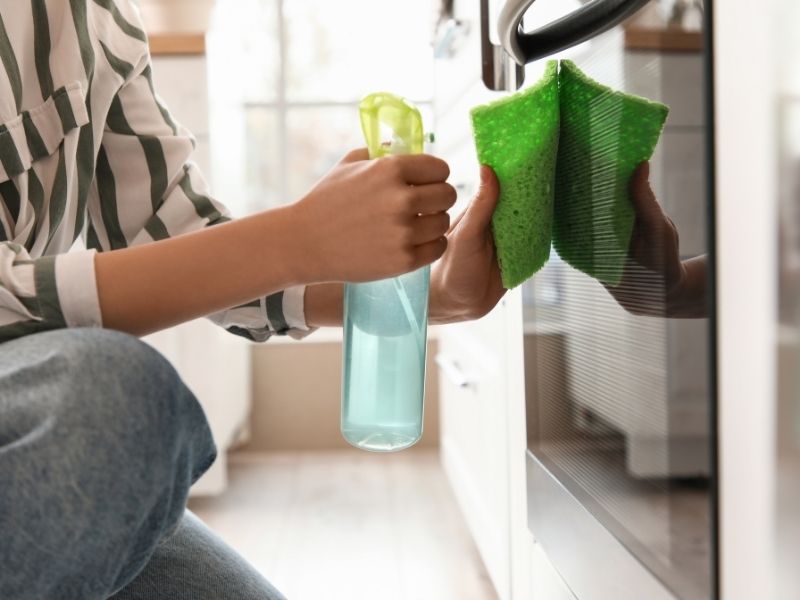
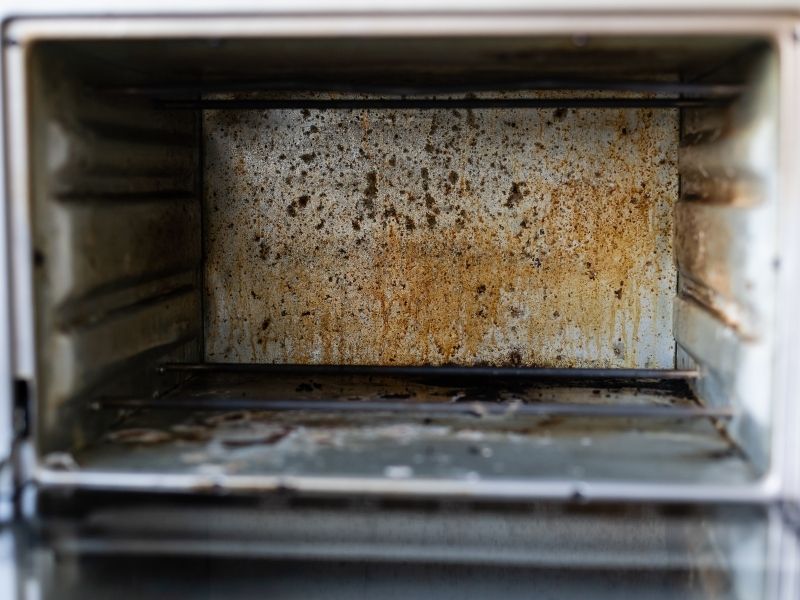
Glass has a non-porous surface that causes grease to cool and harden faster than it would on textured enamel. When fat particles land on hot enamel, some of the moisture evaporates. On glass, the lower surface temperature causes immediate solidification. This is why you can wipe enamel relatively easily after cooking, but the same grease on glass forms a stubborn, baked-on layer. This same principle explains how to clean grease off kitchen walls, especially in areas exposed to repeated heat and cooking vapours.
In commercial kitchens across the UK, we've seen how carbon deposits build up in layers. Each cooking session adds another thin film. Over time, these layers fuse together, creating what looks like a permanent brown or black coating. UK appliance engineers report that a significant proportion of calls about ovens not heating properly are actually caused by heavy grease layers on the inner glass interfering with heat sensors and thermostats.
UK homeowners frequently underestimate how many oven doors have multiple glass panels. Most modern ovens have two or three sheets of glass separated by small gaps. Grease doesn't just settle on the outer surface you can reach. It seeps into those gaps and becomes trapped between the panels. This explains why wiping the visible side alone often makes little difference to long-term clarity.
In rental properties and shared accommodation across the UK, dirty oven glass trapped between panels is one of the most common causes of deposit disputes. Landlords expect tenants to return ovens in the same condition, but if you don't know how to access those inner panels, you're left with a door that looks filthy no matter how hard you scrub the outside.
Before we start any job, we make sure we have everything ready. For oven glass, you don't need expensive specialist products. Most of what works best is already in your kitchen. You'll need baking soda, water, white vinegar, a few microfiber cloths, and at least one soft cloth for buffing. If you're dealing with thick carbon buildup, a glass scraper or retractable razor blade will save you hours of scrubbing.
For the paste, mix baking soda with just enough cold water to form a spreadable consistency. You're aiming for something thicker than toothpaste but not so dry it crumbles. Keep a spray bottle of water nearby to stop the paste drying out while it works. You'll also want a flat, soft surface like a towel or blanket if you're planning to remove the door completely.
Baking soda acts as a mild abrasive that cuts through grease and removes stains without scratching glass. We use it on almost every oven job because it's inexpensive and effective. White vinegar works alongside it, breaking down alkaline grease deposits. When you combine baking soda and white vinegar, the reaction lifts grime in a way that matches most commercial cleaners.
A pressed powder dishwasher tablet dipped in warm water can help remove tough, brown, burnt-on stains. Just wet the tablet, rub it gently across the glass, and watch the grease lift. Bar Keeper's Friend is another safe, bleach-free powder that's effective on grease. For a natural scrub, cut a lemon in half, dip it in salt, and use it to work through stubborn spots. The citric acid in the lemon combines with the abrasive salt to break down fat deposits.
UK homeowners consistently report the highest satisfaction when simple, readily available household products are used correctly, rather than harsh industrial chemicals. Community feedback shows that keeping cleaning products moist on the glass surface for longer dramatically improves results. Dried-on grease softens more effectively when not allowed to dry out mid-clean.
If you prefer ready-made solutions, Astonish Oven & Grill Cleaner is a cream cleaner often used with a sponge for effective results. It's widely available in UK supermarkets and costs a fraction of what you'd pay for branded oven cleaners. The Pink Stuff Paste is another popular option known for cutting through grease. You apply it, leave it for a few minutes, then wipe clean.
Oven Mate Gel is an odourless formula that can be applied and left for anywhere between 3 minutes and 3 hours depending on how bad the buildup is. We recommend checking the instruction manual for your specific oven before using any commercial product, especially if your door has special coatings. Some cleaners can damage self-cleaning finishes or react badly with certain seals.
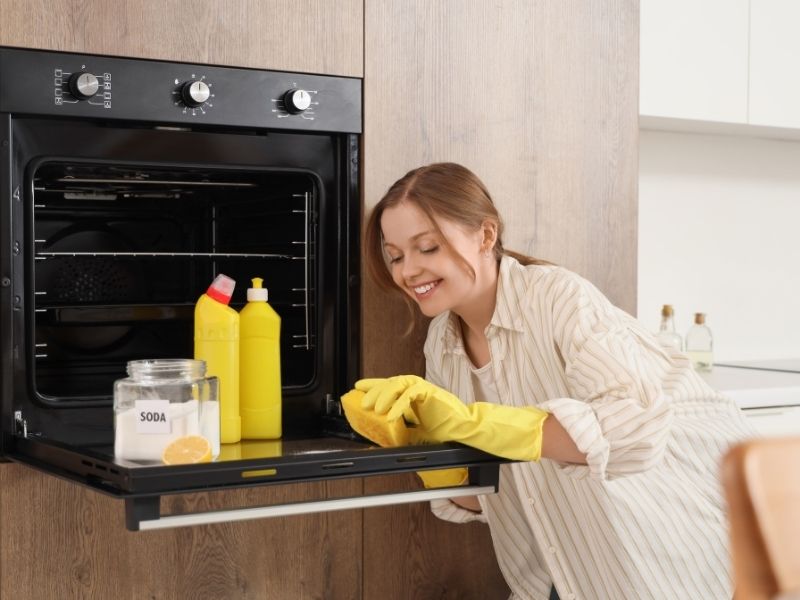
For a quick clean when you don't have time to disassemble anything, start by making sure the oven is completely cold. Safety comes first. Mix your baking soda paste and spread it evenly across the outside glass. Don't be shy with the coverage. You want a thick layer that won't dry out too quickly. Community feedback shows that keeping the paste moist dramatically improves results, so if you see it starting to dry, spray a light mist of water over the top.
Leave the paste on the glass for at least 15 to 30 minutes. This waiting period is crucial. Many UK users describe oven glass cleaning as far more manageable once carbonised grease is loosened first, with most effort spent on removal rather than scrubbing. Allowing the cleaning solution to sit gives the baking soda time to penetrate and break down the grease bonds.
Spread the paste in an even layer using your hand or a damp cloth. Work from top to bottom so drips don't create uneven coverage. Pay extra attention to the bottom of the door where grease tends to pool. If you have visible brown or black spots, add a thicker layer directly over those areas. The paste should look wet and smooth, not chalky or crumbly.
Once it's applied, check it every 10 minutes. If the paste starts to dry and turn white, spray it lightly with water. The moisture reactivates the cleaning action and prevents you from having to scrub dried baking soda, which can actually make the job harder. This simple trick of keeping things moist is something we learned from years of cleaning ovens across Darlington and the wider UK.
For light grease, 15 minutes is usually enough. For heavier buildup or carbonised deposits, leave the paste for 30 minutes or longer. We've left baking soda paste on stubborn commercial oven glass for up to an hour with excellent results. The key is not letting it dry out completely.
When you're ready to remove the paste, use a damp microfiber cloth and wipe in circular motions. You'll see the grease lifting as you wipe. Rinse the cloth frequently in clean water to avoid spreading dirty paste around. For any remaining spots, apply a small amount of white vinegar to a clean cloth and wipe again. The vinegar reacts with any leftover baking soda and helps remove the last traces of grease.
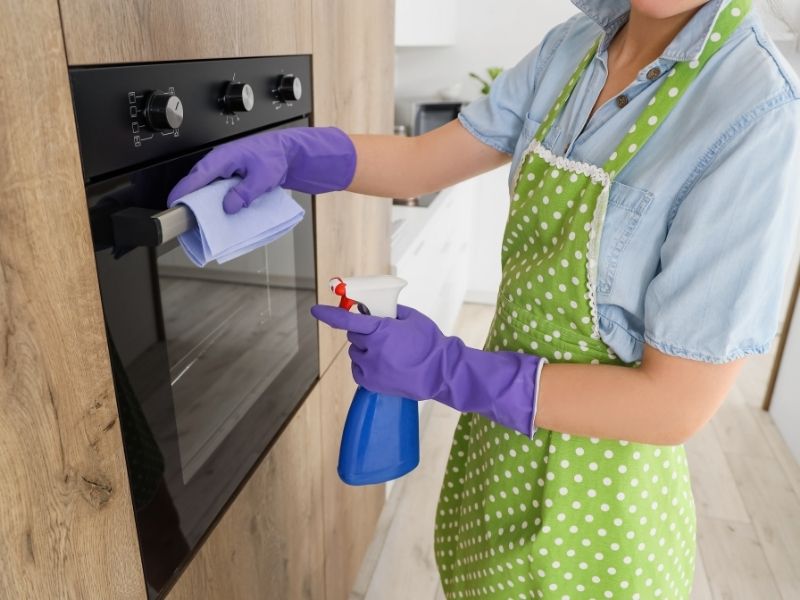
If grease is trapped between the glass panels, cleaning the outside won't be enough. You need to remove the door and access the inner glass. This sounds complicated, but it's straightforward once you know the process. Start by fully opening the door to about 45 degrees. Locate the hinge locks on the left and right sides. These are usually small levers or clips that hold the hinges in place.
Using a screwdriver if needed, flip these hinge locks into the open position. On most UK ovens, you'll see them move about 90 degrees. Once both locks are open, close the oven door slowly until it reaches about a 15-degree angle. At this point, grip the door firmly on both sides and lift upwards while pulling slightly towards you. The door should lift free from the hinge slots. If it feels stuck, double-check that both hinge locks are fully open.
Once the door is off, lay it front side down on a soft surface. We use old towels or blankets spread on the floor or a large table. This protects both the glass and the outer enamel from scratches. Make sure the surface is flat and stable. The last thing you want is the door rolling or tipping while you're working on it.
Check that the hinges aren't digging into your protective surface. Some doors have protruding hinge mechanisms that can damage soft fabrics or even dent themselves if pressure is applied. Position the door so the weight is evenly distributed and nothing is under strain.
With the door laid flat, you'll see screws or clips holding the inner glass panel in place. The exact method varies by manufacturer, so check your instruction manual if you're unsure. On many models, you push gently on both sides of the inner glass panel until it releases from its retaining clips. Slide the glass out carefully.
You may find multiple sheets. Remove them one at a time, keeping track of the order. Clean each panel separately using the same baking soda paste method we described earlier. Pay special attention to the edges where grease tends to accumulate. Once all the glass is clean and dry, refit the panels in reverse order. Make sure each piece clicks securely into place before moving to the next one.
Some doors also have metal reflectors between the glass sheets. These need to be refitted correctly, or your oven won't heat evenly. After cleaning, ensure all reflectors and glass panels are properly positioned before you close the door and reattach it to the oven.
For extremely thick carbon buildup, you need more than just baking soda. This is where a glass scraper or retractable razor blade becomes useful. The trick is using the right technique to avoid scratches. Non-abrasive techniques are repeatedly praised in the UK for preserving glass clarity long-term, as aggressive scraping is one of the leading causes of scratched or weakened oven glass.
Before you start scraping, apply your baking soda paste and let it sit for the full 30 minutes. This softens the top layer of carbon and makes scraping much easier. When the time is up, take your glass scraper and hold it at a 45-degree angle to the surface. Use gentle, controlled strokes in one direction. Never scrape back and forth, as this increases the risk of scratches.
Hold the scraper firmly but don't apply heavy pressure. Let the blade do the work. If you find yourself pushing hard, the grease isn't soft enough yet. Apply more paste, wait another 10 minutes, then try again. Fresh blades work best. A dull or chipped blade is far more likely to scratch the glass than a sharp, clean one.
Work in small sections, wiping away loosened grease as you go. This lets you see your progress and prevents you from scraping over the same area repeatedly. For spots that won't lift with the scraper, apply a small amount of white vinegar and let it sit for a few minutes before trying again. Many UK users describe this method as far more effective than scrubbing, with results that last longer because the grease is fully removed rather than just worn down.
If you'd rather avoid scraping altogether, try the steam method. Place a heat-proof dish filled with water and a splash of white vinegar on the middle oven shelf. Heat the oven to around 100°C and let it run for about 30 minutes. The steam produced will loosen grease on the glass door, making it easier to wipe away.
After 30 minutes, turn off the oven and let it cool slightly. While the glass is still warm but not hot, apply your baking soda paste. The warmth helps the paste penetrate deeper into the grease. Wipe clean after 15 minutes. This combination of steam and paste cuts cleaning time significantly, especially on glass that hasn't been cleaned in months.
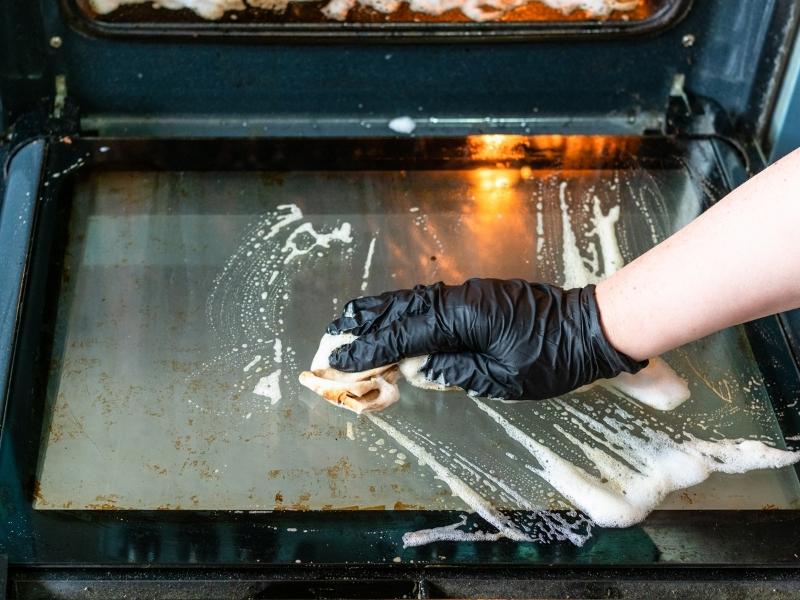
Once all the grease and paste are removed, you need to finish the job properly. Streaks happen when residue is left behind or when the wrong type of cloth is used. After cleaning with your damp microfiber cloth, take a completely dry lint-free cloth and buff the glass in circular motions. This removes any remaining moisture and product residue.
If you still see streaks, spray a light mist of clean water onto the glass and buff again. Sometimes streaks are caused by dried cleaning product rather than grease. A final wipe with plain water followed by immediate buffing usually solves this. We always finish our jobs this way at Cleaners Darlington UK because it guarantees that professional, crystal-clear result customers expect.
Streaks are usually caused by one of three things. Either you've left cleaning product residue on the glass, you've used a cloth that's not clean, or your water contains minerals that dry and leave marks. If you live in a hard water area, use distilled water for your final rinse. It makes a noticeable difference.
Another common mistake is buffing while the glass is still too wet. You need to remove most of the moisture with your damp cloth first, then do a final buff with a completely dry cloth. Using kitchen roll instead of a lint-free cloth can also leave fibres behind that look like streaks when the light hits them.
Never use wire wool or highly abrasive sponges on oven glass. These materials cause permanent scratches that cloud the surface and make it harder to clean in future. We've seen ovens where aggressive scrubbing has left the glass so damaged it needs replacing. UK manufacturers design oven glass to withstand extreme heat, not repeated abrasive cleaning. Long-term clarity is best maintained through regular light cleaning rather than infrequent heavy scrubbing.
Avoid harsh chemicals like oven cleaners meant for enamel interiors. These products can etch glass or damage the seals around the door. If you're cleaning a self-cleaning oven, check your manual before using any product. Some coatings react badly with acidic or alkaline cleaners.
Scratches on glass create tiny grooves where grease can settle. Once glass is scratched, it becomes progressively harder to clean because those microscopic grooves trap carbon deposits. What starts as a few light scratches eventually turns into a cloudy, permanently stained surface that can't be restored without replacing the entire door.
Professional catering cleaners estimate that oven glass can account for up to 40 percent of total oven cleaning time in commercial settings due to layered carbon deposits and multiple glass panels. Using abrasive tools might seem like a shortcut, but it creates long-term damage that costs far more to fix than the time saved.
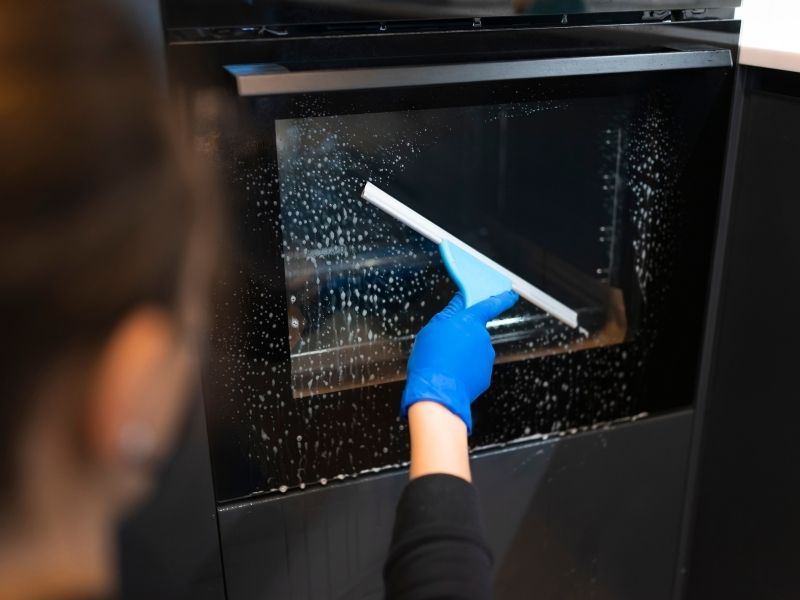
The best approach is little and often. In both domestic and commercial settings, people report the biggest improvement when oven glass is cleaned regularly, preventing grease from reaching the carbonised stage where removal becomes time-consuming and costly. We recommend a quick wipe after every few uses, and a proper clean with baking soda paste every two weeks.
If you cook with high-fat foods regularly, you'll need to clean more often. Roasting meat, baking pastries, or frying in the oven all produce more grease vapour. A simple wipe with a damp cloth while the oven is still slightly warm can prevent buildup before it hardens. This takes less than a minute but saves hours of scrubbing later.
Wait until the oven has cooled to a safe temperature but is still warm. Take a damp cloth and wipe down the inside of the glass door. The gentle warmth helps lift fresh grease before it has time to bond to the surface. Dry with a clean cloth immediately to prevent water spots.
Regularly wiping the oven glass after each use helps prevent grease buildup and keeps your door looking clear. This simple habit is the single most effective way to avoid the heavy carbon deposits that require scraping and harsh chemicals. It's also faster than waiting until the door is completely cold, when grease has already hardened.
Clean oven glass isn't just about appearance. In commercial kitchens across the UK, environmental health officers often flag dirty oven doors during inspections. Reduced visibility increases the risk of burns and heat loss when chefs are forced to open doors repeatedly to check on food. Clear oven glass in professional kitchens has been shown to improve service efficiency, allowing chefs to monitor food without opening the door, reducing heat loss and cooking time.
In rental properties, dirty oven glass trapped between panels is a common cause of deposit disputes. Landlords expect ovens to be returned in the same condition, and grease-streaked glass is one of the first things they notice during checkout inspections. Knowing how to remove the door and clean between the panels can save you money and arguments at the end of a tenancy.
When grease builds up on the glass, it blocks heat radiation and makes temperature sensors less accurate. UK appliance engineers report that many calls about ovens not heating properly are actually caused by heavy grease layers interfering with heat sensors and thermostats. The oven has to work harder to maintain temperature, which wastes energy and increases running costs.
UK fire safety data links grease buildup around oven doors and seals to thousands of minor kitchen fire incidents each year, particularly in takeaways, bakeries, and pubs using high-fat cooking methods. Grease is flammable, and when it accumulates on hot glass, the risk of ignition increases. Regular cleaning isn't just about cleanliness. It's a safety issue that protects your property and the people using your kitchen.